


Arc Raiders: Do You Need Camera Lenses?
What is a Camera Lens used for in Arc Raiders?
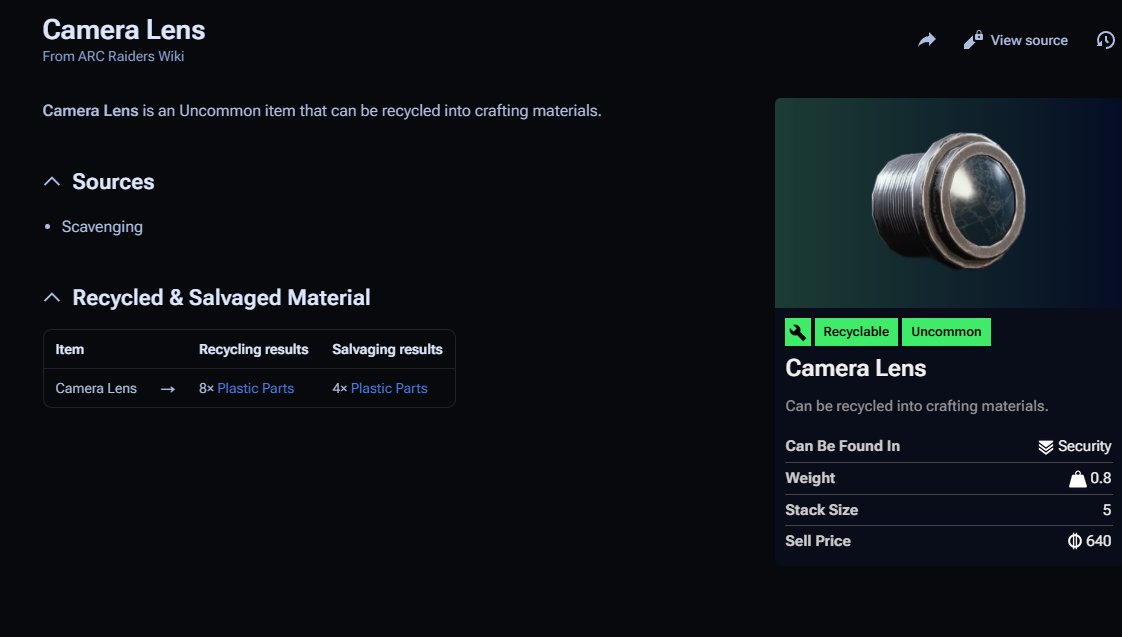
Camera Lens is a recyclable material item. Its direct use is limited to being recycled or salvaged into Plastic Parts. It is not a weapon component, not gear, and not something you equip or upgrade directly.
In practice, this means Camera Lenses are part of the game’s resource loop, not progression on their own. You pick them up while scavenging, bring them back if you survive, and then decide what to do with them at base.
They do not unlock content by themselves. They only matter through what they turn into.
Do you need Camera Lenses for crafting blueprints?
This is the first thing most players worry about.
Camera Lenses are not usually a hard requirement for specific blueprints. You won’t hit a point where the game blocks you because you didn’t save Camera Lenses earlier. Most blueprints ask for Plastic Parts, Electronics, or other general materials rather than the Lens item itself.
Since Camera Lenses recycle into Plastic Parts, they indirectly help crafting. But the game treats them the same way as many other plastic-based loot items. If you’re short on Plastic Parts, a Camera Lens can help. If you already have plenty, it doesn’t change much.
This is why experienced players don’t hoard them for “later just in case.” If you need Plastic Parts later, you can usually get them from many sources.
Should you recycle or salvage Camera Lenses?
In normal play, recycling is the more common choice.
Recycling gives more Plastic Parts than salvaging. Salvaging exists mainly for situations where you need materials immediately or don’t have access to full recycling options yet. Once you’re established, recycling is almost always better value.
Most players follow a simple rule: If it’s a material item and you’re not desperate for space or coins, recycle it.
Camera Lenses fit that rule perfectly.
Are Camera Lenses worth selling for coins?
Camera Lenses have a moderate sell price, which makes them tempting to sell early on. Whether that’s a good idea depends on where you are in the game.
Early game: selling is reasonable. You often need coins more than materials, especially for repairs, basic gear, or vendor purchases.
Mid to late game: selling becomes less attractive. At that point, Plastic Parts tend to be more valuable than coins. Coins pile up naturally, while crafting materials disappear fast.
Experienced players usually stop selling Camera Lenses unless they’re overburdened or clearing stash space.
How often do Camera Lenses show up during raids?
Camera Lenses are not rare in practice. They show up regularly in Security-related loot containers and areas. You will see them often enough that losing one doesn’t feel bad.
This matters because it lowers their strategic value. Items that are easy to replace don’t need careful planning. You can treat Camera Lenses as flexible loot rather than something to protect at all costs.
If you die with one in your backpack, it’s not a big setback.
Should you keep Camera Lenses in your stash?
Most experienced players don’t keep large stacks of Camera Lenses.
A small buffer is fine, especially if you know you’re going to be crafting soon. Beyond that, they just take up space. Since they stack only up to a limited amount and are easy to find again, hoarding doesn’t pay off.
A common habit is to recycle them as soon as you return from a successful run. That way, they immediately turn into Plastic Parts, which stack more efficiently and are used everywhere.
Do Camera Lenses matter for trading or player economy?
Camera Lenses themselves are not a major trade item. Players don’t actively seek them out as standalone loot. What matters is the materials they convert into.
In discussions about arc raiders blueprints trade, Camera Lenses sometimes come up indirectly because Plastic Parts are always in demand. But players trade or value the end materials, not the Lens item itself.
If you’re thinking in terms of long-term economy, it makes more sense to manage your material balance than to track specific recyclable items.
Are Camera Lenses ever required for missions or objectives?
As of normal gameplay patterns, Camera Lenses are not mission-critical items. You won’t get stuck on a quest because you sold or recycled them earlier.
This is an important distinction. Some items feel like junk until a mission suddenly asks for them. Camera Lenses are not one of those items. They stay firmly in the “resource” category.
Because of that, you can safely treat them as disposable.
How do experienced players decide whether to pick them up?
The decision usually comes down to weight and space.
Camera Lenses have noticeable weight. If you’re already carrying high-value loot or combat gear, you might leave them behind. If you’re early in a run and have room, you pick them up without thinking.
Veteran players constantly balance risk versus reward. A Camera Lens is never worth fighting over or pushing deeper into danger. It’s filler loot that fills gaps when nothing better is around.
Common mistakes newer players make with Camera Lenses
One mistake is overvaluing the item because it’s labeled uncommon. Rarity labels don’t always match usefulness.
Another mistake is stockpiling them “just in case” while ignoring what materials they turn into. This leads to a cluttered stash and slower progression.
The last mistake is prioritizing them over better loot. If you have to choose between a Camera Lens and something that directly improves survivability or progression, the Lens should lose every time.
So, do you actually need Camera Lenses?
In short: no, not directly.
You don’t need Camera Lenses as items. You need the materials they become, and even then, they are only one of many sources. They are helpful, common, and safe to use freely.
Treat Camera Lenses as flexible resource loot. Pick them up when convenient, recycle them when back at base, and don’t stress about losing them. If you play that way, they’ll quietly support your progression without ever becoming a problem you need to think about.

 English
 Arabic
 French
 Spanish
 Portuguese
 Deutsch
 Turkish
 Italiano
 Russian
 Romaian
 Portuguese (Brazil)
 Greek
Greek