


IT Service Management Market Market Solution Builds Catalogs Automation And Governance At Scale
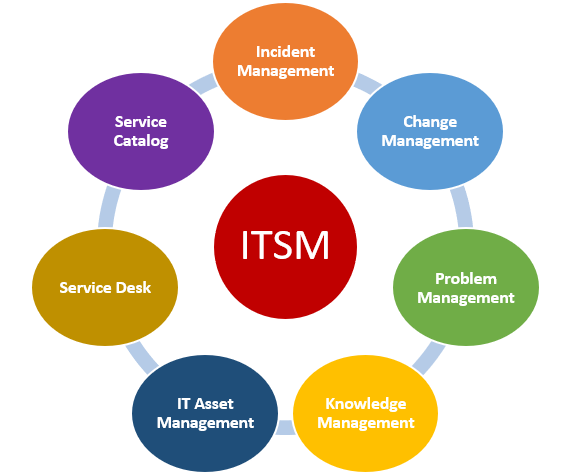
A strong IT Service Management Market Market Solution should begin with clear service definitions and a usable service catalog. Organizations need to identify high-volume requests—access, software installs, device support—and standardize them into forms with automated routing and approvals. Incident management workflows should prioritize fast restoration with clear severity definitions and escalation paths. Problem management should be implemented to prevent repeats, supported by root cause analysis and knowledge capture. Change management should adopt a risk-based model so routine low-risk changes move quickly while high-risk changes receive stronger approvals and testing evidence. The solution must include SLA tracking, dashboards, and reporting so performance is visible. Integration with identity systems enables automated access workflows, while integration with monitoring tools enables proactive incident creation. Governance is critical: define ownership, enforce consistent taxonomy, and establish standards for ticket data quality. Without this operational foundation, automation and analytics will fail.
Architecture and tooling decisions should support scalability and security. The platform should provide role-based access controls, audit logs, and configurable retention policies to meet compliance requirements. CMDB or asset management should be implemented carefully, ideally with automated discovery to keep data current. Dependency mapping improves impact analysis and routing, but only if relationships are accurate. Knowledge management must be treated as a living system: create templates, review cycles, and ownership for articles. Self-service portals should be designed for end users with clear navigation and search. Virtual agents can be introduced for routine requests, but they must provide accurate, policy-aligned answers and offer easy escalation to humans. Integration with collaboration tools can speed coordination during incidents. Analytics should track not only ticket counts but experience metrics such as time-to-acknowledge and satisfaction. These choices ensure the platform supports both agent productivity and employee experience.
Implementation should be phased and measured. Start with one business unit or a set of core processes, then expand as data quality and adoption improve. Define baseline metrics—MTTR, backlog size, first-contact resolution—and track improvements after each rollout phase. Train agents and end users, and communicate clearly how to use the catalog and portal. Establish governance forums to manage changes to workflows and catalogs so customization remains controlled. Automate where it’s safe and repeatable first: routing rules, approvals, and knowledge suggestions. For high-risk areas, keep human validation while building confidence. Regularly review incident trends and update knowledge articles to reduce repeats. Build integration incrementally to avoid fragile dependencies. Service review cadences—monthly operational reviews and quarterly improvement plans—keep progress on track. This disciplined rollout prevents the “big-bang” failures that can damage trust in the platform.
A mature solution evolves into an enterprise workflow engine. Enterprise service management expands the catalog to HR onboarding, facilities requests, and security access, creating a unified internal service portal. AIOps integrations can reduce alert noise and accelerate triage, while runbook automation can resolve common issues automatically. Change integration with CI/CD improves traceability and enables faster, safer releases. Continuous improvement becomes data-driven: teams use dashboards to identify bottlenecks and refine workflows. Data governance remains ongoing, ensuring tickets, assets, and dependencies stay accurate. The best solutions balance automation with accountability, keeping humans in control of high-impact decisions. Over time, ITSM becomes a strategic capability—reducing downtime, improving employee experience, and supporting scalable digital operations. When service catalogs, governance, and automation are aligned, ITSM delivers compounding operational benefits across the organization.

 English
 French
 Spanish
 Portuguese
 Deutsch
 Turkish
 Dutch
Dutch
 Italiano
 Russian
 Romaian
 Portuguese (Brazil)
 Greek
Greek