


What Does a Safety Officer Do on a Construction Site?
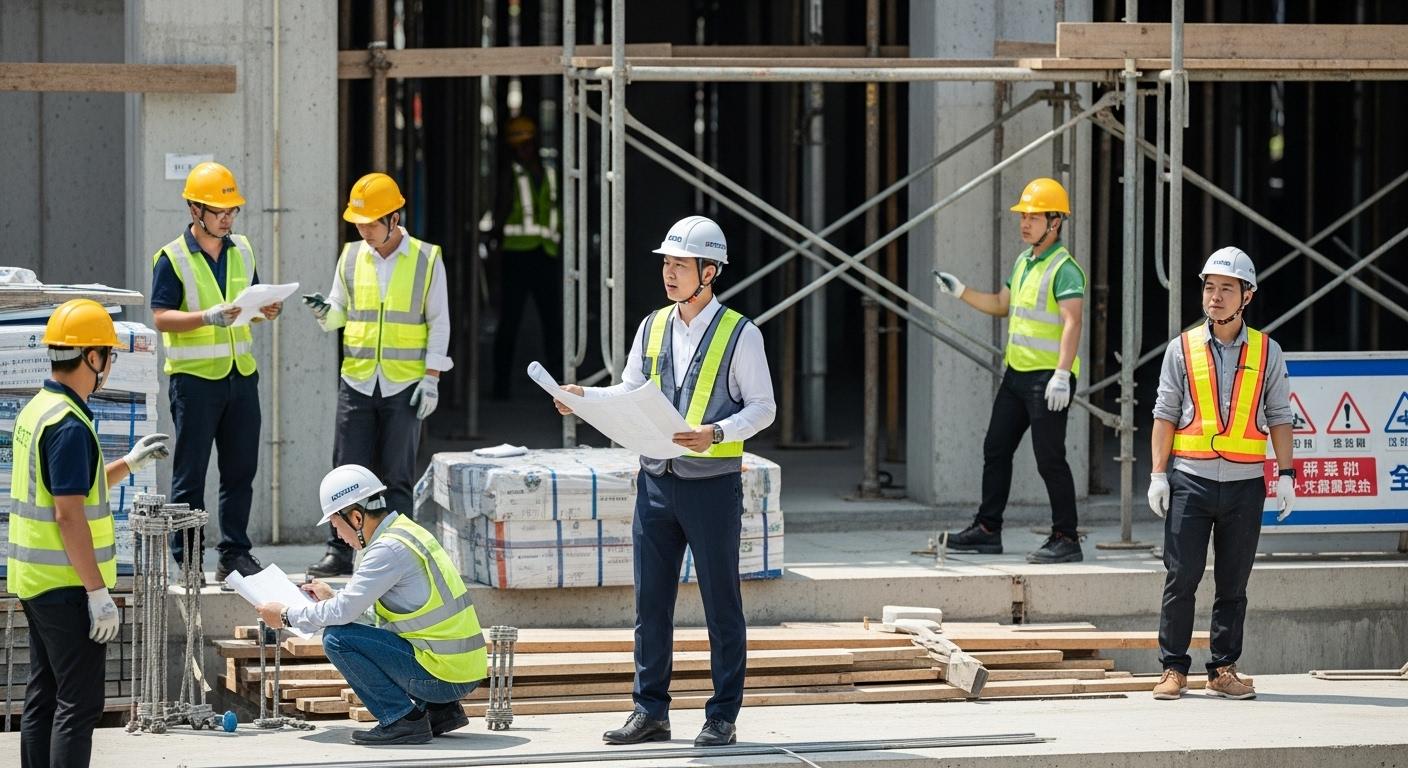
Each time you dive onto a construction site, one person works quietly behind the scenes to keep everyone safe, every minute of the day: the safety officer. What does a construction site safety officer do? Well, consider them sort of protecting the space between chaos and control. Their work is not just about rules and checklists, it’s about saving lives, reducing risk and making sure every worker comes home in one piece. Let’s break it down.
What a Safety Officer Really Does
A construction safety officer wears many hats: inspector, educator, communicator and occasionally peacemaker. They are the conduit between site management and workers, whose role it is to make sure all safety standards are being met and that people know how they’re supposed to be met.
Their core job? To make things safe before they become unsafe.
Here’s what that means in practice, day by day:
-
Monitoring site operations for hazards
-
Conducting safety audits and inspections
-
Training workers on safety protocols
-
Investigating incidents or near-misses
-
Keeping detailed safety records
Today’s safety officers rely on far more than instinct. They use digital checklists to maintain standards, incident-tracking software to monitor hazards, and wearable sensors to collect real-time data. Some even coordinate with commercial estimating services in USA to align project cost estimates and takeoffs with safety budgets, ensuring that financial planning doesn’t compromise worker protection. By combining human expertise with smart tools, projects stay compliant, cost-effective, and safe.
Importance of Safety Officers in Construction: Why Every Construction Site Needs a Safety Officer
But here’s the thing: working construction is dangerous. New data shows that 1 in 10 construction workers is injured on the job every year. If it were not for a safety officer, the statistics would be through the roof.
These men prevent accidents by constantly observing, warning and correcting in time. They provide enforcement of OSHA or local regulations and see to it that the job complies with all safety codes, from how high a scaffold can be erected to how electrical wiring must be distributed.
But their influence goes deeper. A solid safety officer garners trust from the workforce. When workers feel secure, productivity goes up, morale remains high, and projects move along faster. Safety, in the end, isn’t defined by compliance alone; it’s just smart business.
What Is the Job of a Safety Officer?
Let’s go through the main duties one by one:
Conducting Risk Assessments
The safety officer surveys the entire work site for common hazards before any project is initiated. To the minute details of work, from excavation to finishing, they analyse what could go wrong, where accidents may happen. Next, they come up with a plan to control each risk, which supervisors and workers follow so that the risks are reduced as much as possible.
Implementing Safety Protocols
Site safety manual produced and maintained by the site’s officers146. They make sure workers have their PPE (helmet, gloves, boots, vest) and that the equipment they use, like harnesses or scaffolding, is up to code. They don’t just enforce rules; they instruct about why the rules are there.
Training and Awareness
Education is half the battle. During routine toolbox talks, safety officers focus on pertinent daily topics of safety, highlight site-specific hazards and promote an open discussion dialogue with regard to speaking up. Such discussions help raise awareness and foster a sense of teamwork.
Monitoring Daily Operations
It's a new game every day out in the field. The safety officer patrols, watches for conformity, identifies so-and-so practice and intervenes on the spot. Whatever it is, the loose debris, the improper lifting of the racks or the exposed wiring, they deal with it long before it ever makes headlines.
Investigating Incidents
When something goes awry, the safety officer springs into action. They examine the scene, determine the cause and suggest ways to prevent it. This is the result of accountability, and that helps prevent further occurrences.
Reporting and Documentation
Paperwork is not the most thrilling thing in itself, but it’s essential. Inspect logs and training, or compliance reports, are kept by safety officers. These papers help to protect the company from legal consequences and show that you’re responsible in the event of an audit.
Professional Skills of a Construction Safety Officer
Not everyone is cut out to be a safety officer. It requires technical know-how, the ability to act swiftly and good communication skills. Here are the must-have traits:
-
Attention to detail: seeing hazards others do not.
-
Leadership: leading teams with authority and empathy.
-
Problem-solving: handling emergencies calmly.
-
Understanding of safety regulations and codes.
-
Strong documentation and reporting skills.
Above all, a safety officer must have integrity, the courage to halt unsafe work, whatever deadlines are looming.
How Safety Officers Help Projects Succeed
Let’s face it, delays and accidents still have the power to snatch defeat from the jaws of even a well-crafted victory. A safety officer prevents both. Their constant oversight:
-
Keeps insurance costs low
-
Minimizes downtime
-
Improves worker confidence
-
Protects the company’s reputation
Safety at its best enables everyone to do their job better. Supplies arrive on time, workers do better work, and clients see professionalism. Safety Is Not an Expense; It’s a High-Yielding Investment.
Challenges Safety Officers Face
For all its value, safety officers can walk a lonely road. They have to weigh the need for speed against the needs of safety, manage tight deadlines and in some cases push back against unsafe shortcuts. Sometimes it’s hard to hold up the rules when pressure builds, but a good officer doesn’t back down, especially when realistic schedules and budgets, supported by accurate industrial estimating services, are set through detailed takeoffs before work begins.
They also have the challenge of changing behaviour, telling veteran workers to adhere to reformed safety practices, or wear PPE all the time, not sometimes. Nowadays, communication, empathy and patience are their biggest weapons.
The Future of Construction Safety
Construction is evolving fast. With automation, drones and A.I.-powered monitoring systems, safety officers are increasingly becoming data managers as well as field practitioners. They’ll be predicting risks before they happen as soon as with real-time analytics and sensors.
But no technology can replace human judgment. So what’s the most effective safety tool of all, and yet is kept from us at times like these? It remains, as always, in every form of transportation, including a school bus stop or pick-up shelter, the trained, attentive and caring officer who watches out for others.
Conclusion
Well then, what does a safety officer do at a construction site? In one word, all the things that keep people alive and processes running smoothly. They are the eyes that see risk, the hands that steer teams and the voice that says, Stop, let’s fix this before someone gets hurt.
From the first plan to the last inspection, the safety officer is an unsung hero of any build that has gone right. Their vigilance doesn’t just keep them safe; it powers progress.
FAQs
How many years does it take to become a construction safety officer?
Uneasy seek out important information It usually requires a couple of years 4 years to become qualified. This will include obtaining a diploma or degree in occupational health & safety, getting certifications such as NEBOSH and OSHA, and gaining field experience.
What are the eligibility criteria for a safety officer?
Many employers prefer to hire someone with a Bachelor’s degree in safety management, engineering or environmental science. OSHA, NEBOSH or IOSH certification helps to build up credibility. In-person site experience is also crucial.
At what interval should safety inspections be carried out on a construction site?
Active worksites are ideally inspected daily, and other situations weekly. But these processes vary based on a project’s size, complexity and local regulations.

 English
 Arabic
 French
 Spanish
 Portuguese
 Deutsch
 Turkish
 Dutch
Dutch
 Russian
 Romaian
 Portuguese (Brazil)
 Greek
Greek